
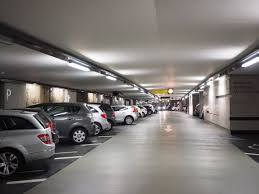
City parking spaces have multiple levels that support a high density of cars while maximizing limited vertical space. These parking garages are integrated into mixed-use developments, such as residential buildings or shopping centers. Here is more information on how vehicle sizes are accommodated in urban garages:
High-Clearance Main Entrance
Some garages have main entrances with high clearances to accommodate tall vehicles. The clearance provides vertical room for SUVs and commercial vans that cannot fit through standard openings. These vehicles require additional overhead space; taller gateways allow drivers to enter the facility without risking damaging their vehicle’s roof. Architects place these entrances near loading zones or commercial hubs where large transport vehicles operate. While a standard garage might exclude commercial vans, facilities with a high-clearance entrance integrate larger models safely into their operations.
Automated Lift Systems
Some parking garages have automated lift systems that facilitate the vertical storage of vehicles within urban footprints. They use stackable platforms to move cars. This multiplies the available parking capacity by utilizing the building’s overhead space. These lifts are designed to handle various car profiles, allowing a garage to accommodate multiple vehicle sizes.
Mechanical lift implementation involves integrating moving platforms to replace traditional ramps. Since the lifts can adjust to the dimensions of a car, each vehicle is stored in a compact manner. This allows for a higher density of parked cars without expanding the structure’s physical ground area. The automated systems position the vehicles precisely to avoid contact with the garage walls or other parked cars.
Oversized Vehicle Areas
Oversized vehicle areas accommodate cars that exceed the dimensions of standard parking garages. These sections provide the increased width and length needed for large trucks and SUVs to park without obstructing lanes. Since urban garages manage diverse traffic, these areas prevent larger models from interfering with the movement of compact cars. The oversized vehicle areas are situated in sections of the garage with fewer structural pillars and wider aisles. This provides enough space to accommodate the wider turning radius and longer body of a large vehicle.
Clearance Warning Signs
Clearance warning signs inform motorists of the vertical and horizontal boundaries within a parking structure. Professionals position these markers at decision points, such as entrances and ramp inclines. This helps prevent vehicles from entering areas where they might strike the ceiling or structural beams. By providing visual data, these signs allow drivers to verify that their vehicle dimensions are compatible with the facility’s architecture. To manage diverse vehicle sizes, parking facilities utilize the following signage strategies:
- Displaying height limits
- Marking overhead obstructions
- Indicating ramp gradients
- Identifying narrow passages
The use of signs shifts the responsibility of height verification to the moment of entry. Many urban garages contain varying ceiling heights across different floors; signage must be consistent and highly visible to be effective. The signage protects the garage’s infrastructure by maintaining traffic flow that is appropriate for each section’s dimensions.
Wide Turning Lanes
Garage layouts incorporate wide turning lanes to provide space for long vehicles to navigate corners safely. This helps prevent collisions with structural pillars or other parked cars. The implementation of wide turning lanes involves reducing the density of parking stalls near corners and intersections. Larger vehicles require more room to swing their front ends while turning. The wide-turning lane design is useful in multi-level structures, where drivers transition between ramps and parking levels.
Learn More About Parking Garages
Many parking garages apply high-visibility markings at transition points where drivers navigate turns or floor changes. This draws attention to structural boundaries that drivers might otherwise miss in low-light environments. Contact a reputable provider of parking management to learn more about their services.